Mixtiza = mixed [race] + mestiza
Lately, I have been thinking about race. In particular, I’ve been reflecting on my experience of race as a person of mixed ethnicity, something I’ve mentioned in previous posts. A little bit of background for you – my mother is a white Anglo Australian, and my father is Filipino, from the Ilocano and Subanen ethnic groups. In the Philippines, someone like me is called a mestiza, often shorted to tisay. I also refer to myself as mixed race, mixed ethnicity or biracial.
Having spoken to people and read poems about it, it is clear that the mixed race experience is complex, nuanced, highly individual and yet somehow similar. I really like this poem I encountered in the Shade Journal –
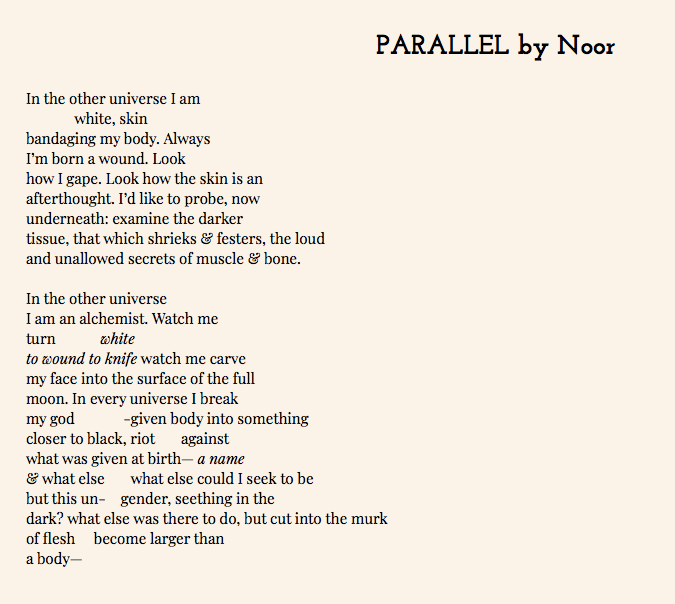
The poem presents a confronting but evocative image of a body made strange by close examination, and significantly, made Other. To be a person of colour in a white country is to be constantly made Other. To be a mixed-race person in nearly any country is to always be an Other.
A quick note about race before I go on – the thing about ‘race’ as a concept is that it’s problematic. It has no basis in biology and emerged out of colonialism, imperialism and white supremacy. However, it has had lasting effects and consequences on the way people (especially white, Western countries and even colonised countries) view people of colour. These social implications are something to bear in mind in conversations about race. This is also where the difficulty really starts for people like me, who are ‘mixed race.’
I’d like to speak now to my personal experience of race. This experience has been shaped by the places I’ve lived, namely, the Philippines and Australia. Now, ‘mixed race’ people can wind up with a range of ethnically coded features, thanks to the genetic lottery. I’ve known some people who passed as white and some who looked ethnically ambiguous. I happen to have more Filipino facial features (flat nose, thick lips) but am bigger boned (read: taller and wider) than the majority of Filipinos. I also have skin that can become very fair during the winter, but if I tan well in summer, that tan can last six months. My hair is a light enough brown that it stands out in a sea of black-headed Filipinos, but so dark it may as well be black.
Without the context of place, I’m one of those ‘ethnically ambiguous’ people. But put me in the Philippines (which is where I was from my childhood to early teens) and people will read me as white, and therefore immigrant. Put me in Australia (where I am now and have been for the last seven years), and people will read me as brown/Asian/not-white, and therefore immigrant. In neither case, though, was I actually an immigrant, although these days I identify as one because it speaks to my experience (I can elaborate, but I would need a whole other post for that. Maybe next time).
Although sometimes I feel homeless, liminal, transitory – the experience is not all bad. Now that I’m permanently living in Australia where people read me as Filipino, I am lucky that, having grown up in the Philippines, I do identify with what it means to be Filipino. It gives me a lot of joy to be able to finally claim that identity which I have always had but felt denied me and to be able to express it. The irony is that I must be separated from its origins in order to do so.
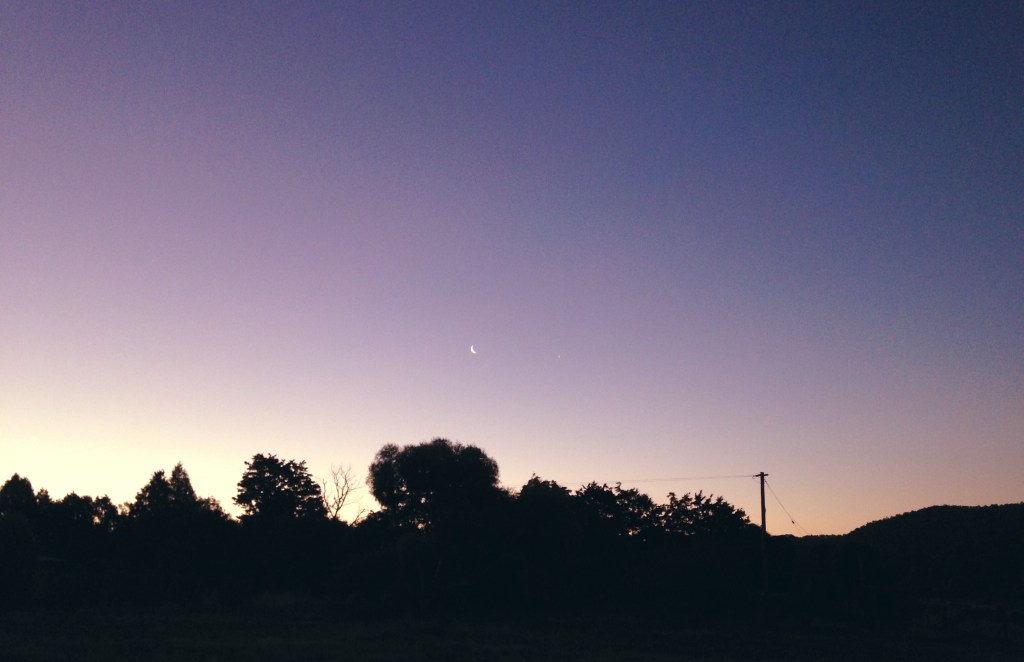
There are no clear-cut lines when it comes to being mixtiza. There is no black or white, day or night; just the grey, hazy dusk. But all the best colours of the sky happen at twilight. And I wouldn’t change it for the world.
I feel there is much more that could be said about this topic, and about race more generally, but I’ll save it for another day. I hope this post has been helpful for anyone who may not be mixed race but has friends or family who are. And if you, like me, are mixtiza – there are so many of us out there, and it’s easy to feel alone but you don’t have to. Hit me up, I’d love to make friends!
 KAYA ORTIZ
Leave a comment